CremaCraft is reader-supported. When you buy through links on our site, we may earn an affiliate commission — at no extra cost to you.
This is the classic first-machine decision, and it is really a decision about two philosophies. The Breville Bambino is a modern appliance: ready in three seconds, temperature-stable, and designed to forgive a beginner’s mistakes. The Gaggia Classic Evo Pro — the current US model in the Classic Pro line — is a traditional Italian machine: a commercial 58mm portafilter, a single boiler, and a design you can repair and modify for years. Both make real espresso. Neither is a toy. The question is which kind of owner you want to be.
The short verdict: Buy the Bambino if you want fast, consistent drinks with the shortest learning curve and the lowest price. Buy the Gaggia if you want the café-standard 58mm platform, a machine that teaches you proper technique, and hardware you can keep alive indefinitely. And if your budget sits at the Gaggia’s price but your heart is with Breville’s convenience, the Bambino Plus — priced almost exactly where the Gaggia sits — is the third option this comparison covers in its own section below.
Prices note: All prices are checked-October-2026 US prices. The Bambino is $299.95. The Gaggia Classic Evo Pro lists at $549 with a street price around $499. The Bambino Plus lists at $499.95, seen around $485 on Amazon in October 2026. Sale pricing moves often, so confirm the live price before buying.
Head-to-Head: Specs Compared
| Category | Breville Bambino (BES450) | Gaggia Classic Evo Pro |
|---|---|---|
| Price | $299.95 | $549 list, street ~$499 |
| Portafilter | 54mm | 58mm commercial |
| Heating system | ThermoJet, ready in 3 seconds | Single boiler, ready in a few minutes |
| Temperature control | PID control + low-pressure pre-infusion | No PID — temperature surfing is the known quirk |
| Steam | Manual wand, single-hole tip | Commercial-style manual wand; brew-then-steam sequence |
| 3-way solenoid | No — wetter pucks | Yes — drier pucks |
| Water tank | 47 oz (1.4 L) | 2.1 L (72 oz) |
| Accessories ecosystem | 54mm Breville ecosystem | Huge 58mm café-standard aftermarket |
| Repairability | Appliance model — limited user servicing | Famously repairable and modifiable; deep parts scene |
| Footprint | Compact, ~6.7 in wide class | Larger, traditional machine footprint |
Before the round-by-round breakdown, one shared truth: neither machine includes a grinder. Both need a separate espresso-capable grinder to show what they can do, so add roughly $200 for an entry-level capable grinder to either price — or see our best espresso grinder under $500 guide. Any comparison that ignores the grinder is comparing half a setup. For the wider field, our best espresso machine for beginners guide places both machines among the other leading picks.
Price and Value
The Breville Bambino wins this round outright. At $299.95 it costs roughly $200 less than the Gaggia Classic Evo Pro at its ~$499 street price — and $200 is, not coincidentally, about the price of the grinder both machines need. A Bambino plus a grinder costs about the same as a Gaggia alone, still unground. For a beginner working to a fixed total budget, that is a serious argument.
The Gaggia’s answer is about time rather than money. Its value case rests on longevity: a repairable machine with available parts can stay in service far longer than an appliance, and its 58mm accessories carry over to future machines. Owners report running Classics for a decade or more with gasket changes and occasional parts swaps. If you amortise the Gaggia over ten years and the Bambino over a typical appliance lifespan, the gap shrinks — but that maths only works if you actually keep it, which is a bet on your own hobby appetite.
Check price — Breville Bambino | Check price — Gaggia Classic Evo Pro
Heating and Temperature Control
This is the round where the two philosophies collide hardest. The Bambino’s ThermoJet system is ready in 3 seconds, and its PID temperature control holds brew water steady while low-pressure pre-infusion starts the shot gently. In practice, specs show the Bambino removes temperature as a variable almost entirely — you can walk up half asleep and the water will be where it should be, shot after shot.
The Gaggia’s single boiler takes a few minutes to come up to temperature, and with no PID, the boiler cycles around its set point, so the exact brew temperature depends on when in the cycle you pull the shot. The workaround — flushing or timing the shot to the boiler light, the routine called temperature surfing — is well documented and owners treat it as a learnable ritual rather than a defect. But it is undeniably an extra variable for a beginner who is already juggling dose, grind, and tamp. Since the 2023 Evo update the Gaggia does run a proper 9-bar OPV, so pressure, at least, is correct out of the box.
Round verdict: Bambino, clearly, on convenience and consistency. The Gaggia asks you to manage temperature; the Bambino simply manages it for you.
Shot Quality and the Learning Curve
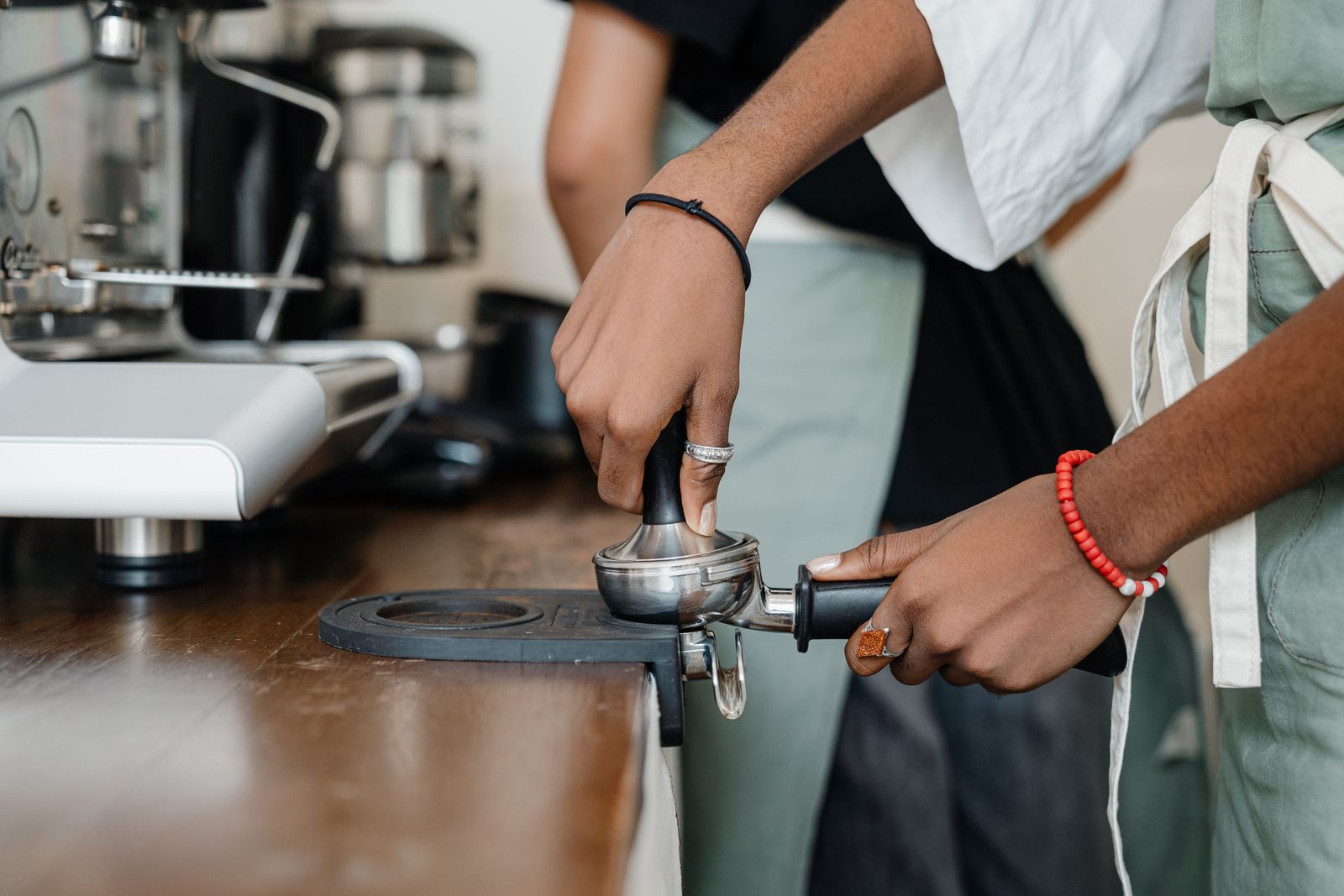
Here is the honest framing 2026 roundups keep returning to: in skilled hands, the Gaggia’s ceiling is arguably higher, because the 58mm basket, standard accessories, and fully manual control let an experienced user fine-tune everything. In beginner hands, the Bambino usually produces the better shot in the first month, because its stability and pre-infusion forgive the inconsistencies every new owner has.
That gap closes with practice. The Gaggia is, in effect, a teacher: it exposes every variable, so your technique has to improve, and when it does, the machine rewards you. The Bambino hides several variables competently, so your shots are good quickly but your understanding grows more slowly. Neither outcome is wrong — but know which one you are buying. Whichever you choose, the core skill is the same, and our guide to dialing in a shot applies to both machines equally.
Steam and Milk Drinks
Both machines steam manually, but the experience differs. The Bambino’s single-hole wand tip steams slowly, which gives beginners time to position the pitcher and learn what properly textured milk sounds and looks like. There is no waiting between brewing and steaming — the ThermoJet handles both on demand — so a latte is one continuous, quick workflow.
The Gaggia’s commercial-style wand is the more powerful, more professional tool, and it can produce excellent, café-grade milk texture. But its single boiler imposes a sequence: brew first, switch to steam mode, wait for the boiler to climb, steam, then let the boiler cool before the next shot. For one drink that rhythm is fine. For two lattes back to back, plus guests, the Gaggia’s workflow is measurably slower and owners plan around it. Its steam power also punishes hesitation — milk can overheat quickly while you are still learning.
Round verdict: a draw on milk quality at each machine’s best; the Bambino wins on speed and forgiveness, the Gaggia wins on raw steam power and professional feel.
Everyday Details: Solenoid, Tank, and Footprint
Small details decide long-term satisfaction. The Gaggia has a 3-way solenoid valve; the base Bambino does not. After a shot, the Gaggia’s solenoid vents pressure and moisture, leaving a dry puck that knocks out cleanly. The Bambino’s pucks are wetter and messier, and you learn to give the portafilter a moment before unlocking it. It changes cleanup, not flavour — but you will do it every single day.
The Gaggia’s 2.1 L (72 oz) tank dwarfs the Bambino’s 47 oz (1.4 L) tank, so Gaggia owners refill less often — though the Bambino’s smaller tank is arguably easier to lift, wash, and refresh with fresh water. On footprint, the Bambino’s compact, roughly 6.7-inch-wide class body is the clear winner for small kitchens, while the Gaggia needs a more generous, permanent home on the counter.
Accessories and the Ecosystem Question
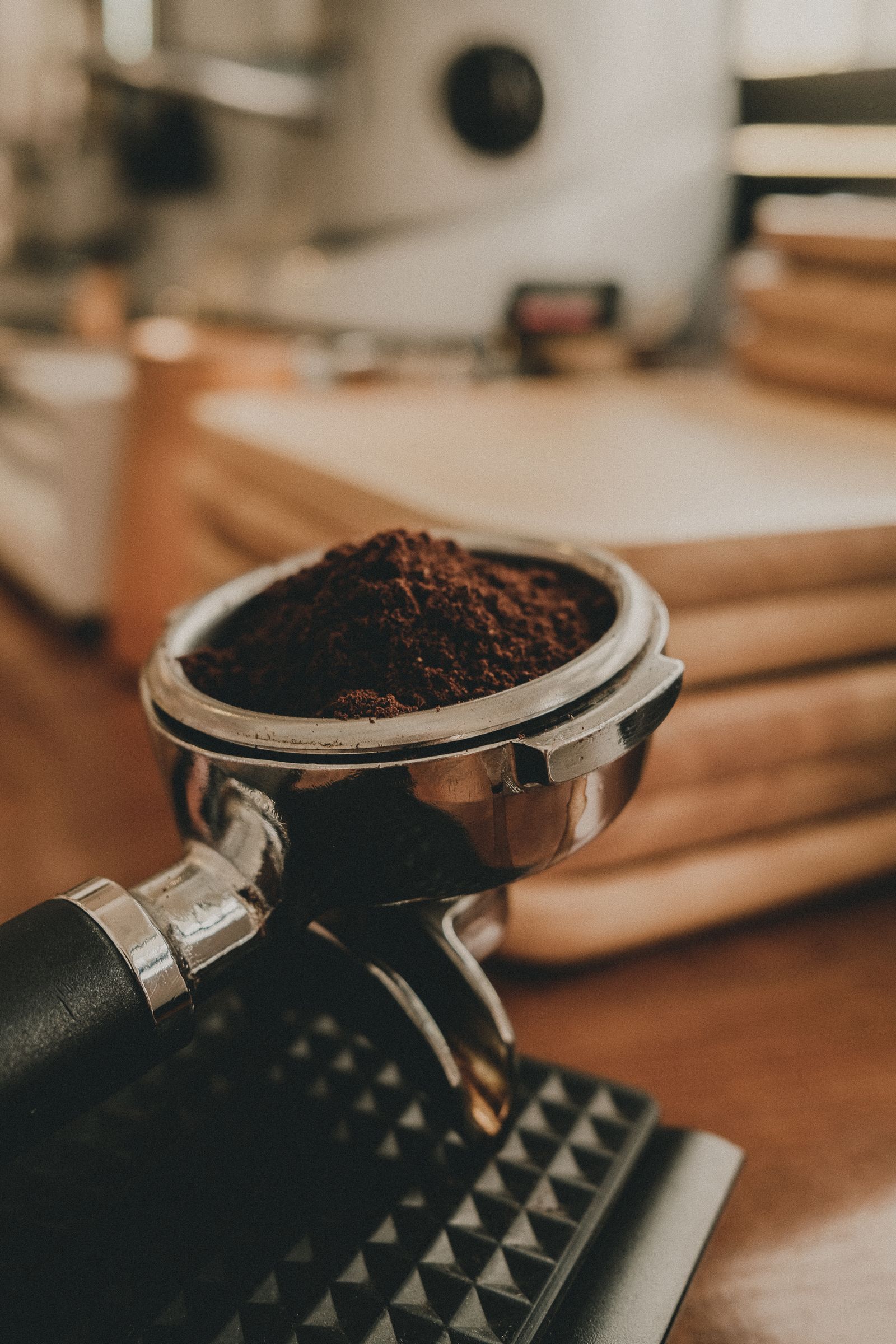
The Gaggia’s 58mm portafilter is the café standard, and that unlocks the largest accessories ecosystem in home espresso: precision baskets, calibrated tampers, distribution tools, bottomless portafilters, shower screens, and spare parts at every price level, much of it inexpensive because the market is so large. Skills transfer, too — learn on 58mm and every future machine feels familiar.
The Bambino’s 54mm Breville ecosystem is smaller but perfectly serviceable: baskets, tampers, and tools made for Breville machines are widely available from Breville and third parties. You will find what you need; you will simply have fewer choices, and if you later move to a 58mm machine, your 54mm accessories do not follow you. For most beginners this is a minor point. For the hobbyist already eyeing upgrades, it is a genuine mark for the Gaggia.
Repairability and Long-Term Ownership
No category separates these machines more. The Gaggia is famously repairable and modifiable: boilers, pumps, gaskets, and switches are available parts, teardown guides and community knowledge are deep, and a whole modding scene exists for adding PID control, pressure gauges, and more. A Gaggia that breaks is usually a Gaggia that gets fixed — often by its owner, on a weekend, with a screwdriver.
The Bambino follows the appliance model. It is a sealed, electronics-led product: reliable in normal service according to owner reports, but not designed for user repair, and out-of-warranty failures are more likely to mean replacement than repair. Upkeep on both machines is otherwise similar — backflushing where supported, wiping wands, and regular descaling; our guide to descaling an espresso machine covers the routine either machine will need.
If you keep appliances until they die and replace them without regret, the Bambino model will suit you. If the idea of a machine you maintain for a decade appeals to you, only one of these two offers that life.
The Price-Matched Alternative: Breville Bambino Plus
Best for: Buyers whose budget matches the Gaggia (~$499) but who want Breville’s speed and automatic milk instead of the 58mm platform.
Any honest Bambino-versus-Gaggia comparison has to acknowledge the Breville Bambino Plus, because at $499.95 list — seen around $485 on Amazon in October 2026 — it sits at exactly the Gaggia’s street price. The choice at $500 is therefore not really “cheap Breville or Gaggia,” it is “which $500 machine?”
The Plus keeps the Bambino’s 54mm portafilter and ThermoJet 3-second heat-up, then closes the base model’s gaps: it adds the 3-way solenoid the Gaggia has, a larger 64 oz (1.9 L) tank, and a 4-hole steam tip. Its headline feature is Auto MilQ automatic milk texturing, with 3 temperature and 3 texture settings and a self-purging wand — set the pitcher down and the machine textures the milk for you, though manual steaming remains available. Against the Gaggia, the Plus still offers no 58mm ecosystem and no repairable, modifiable platform. What it offers instead is the fastest, easiest route to a good latte at this price.
If your drinks are milk-first and your patience is workflow-first, the Plus is arguably the strongest $500 pick of the three. If your interest is espresso as a craft, the Gaggia remains the $500 pick. The base Bambino, meanwhile, keeps the value crown for everyone whose budget is really $300.
Check price — Breville Bambino Plus
Verdict Boxes
Buy the Bambino if… you want the lowest price, a 3-second heat-up, stable temperatures without any technique, a compact footprint, and good espresso from your first week. You accept wetter pucks, a 54mm ecosystem, and an appliance you replace rather than repair.
Buy the Gaggia if… you want the 58mm café standard, a huge accessories aftermarket, a machine you can repair and modify for years, and a platform that will force your technique to grow. You accept a few minutes of warm-up, a brew-then-steam routine, and temperature surfing as part of the ritual.
Buy the Bambino Plus if… your budget is around $500, your drinks are mostly milk drinks, and you want automatic milk texturing, a solenoid valve, and Breville speed — convenience at the Gaggia’s price, without the hobbyist platform.
How to Choose Between Them
Strip it back to three questions. First, budget: if the total — machine plus grinder — must stay lean, the Bambino is the only answer here, and our best espresso machine under $300 guide shows how it anchors that tier. Second, drinks: milk-heavy households get the most daily joy from the Bambino line’s speed, and from the Plus’s automatic milk in particular, while straight-espresso drinkers feel the Gaggia’s steam compromises least. Third, temperament: appliance or instrument? The Bambino is an appliance in the best sense — it removes friction. The Gaggia is an instrument — it rewards attention. Both make real espresso; only you know which relationship with a machine you will still enjoy in year two.
What About AliExpress?
Search AliExpress and both sides of this comparison get tempting listings: machines that look similar for far less, and a flood of cheap accessories — including 58mm tampers, baskets, and portafilters for the Gaggia and 54mm tools for the Bambino, often at a fraction of US prices.
Separate the two categories. For simple accessories, the risk is low and the savings are real; a machined tamper or a spare basket does not care where it shipped from, and many Gaggia owners in particular furnish their setups this way. For the machine itself, think carefully. Espresso machines are heavy, so shipping is slow and hard on the product. Voltage matters — a machine built for another market’s power supply is not a bargain in a US kitchen. Above all, warranty and support matter: a pump machine with no US warranty, no local parts channel, and no realistic return route is a gamble, and it undercuts the Gaggia’s single greatest strength — its repairable, parts-supported life — while giving up Breville’s US retail support at the same time.
Our take: accessories, if you are patient, can be a sensible saving. The machine itself should come from a US retailer with a warranty behind it, whichever side of this comparison you land on.
FAQ
Which makes better espresso? Both make real espresso. Specs and owner reports suggest the Bambino is more consistent for beginners thanks to PID control and pre-infusion, while the Gaggia’s 58mm platform and manual control give experienced users a higher ceiling. The grinder you pair with either will matter more than the badge on the machine.
Is 58mm really better than 54mm? Not automatically — shot quality depends on the whole setup. The 58mm advantage is practical: it is the café standard, so baskets, tools, and parts are cheaper and more plentiful, and your skills and accessories transfer to future machines.
Which is better for lattes? For workflow, the Bambino — no boiler waiting, and forgiving steam for learners. For steam power and a professional wand feel, the Gaggia — once you have learned its brew-then-steam sequence. If milk is your priority and your budget reaches $500, the Bambino Plus and its Auto MilQ system beat both.
Which lasts longer? The Gaggia has the stronger longevity case because it is repairable, with deep parts availability and a community that keeps old machines running. The Bambino follows an appliance model: dependable in service, but not built for owner repairs.
What else do I need to budget for? A grinder, first — neither machine includes one — plus fresh beans and basic upkeep like descaling. Budget the setup, not just the machine, and the cheaper Bambino’s price advantage becomes the grinder that makes either machine shine.
If the Gaggia wins you over, check its refurbished channel before paying list: Whole Latte Love's refurbished Classic Pro E24 listing was $399 against $549 new at last check — stock comes and goes.
Comments
Post a Comment
Play nice — spam and promo links are deleted.